
What the wash ticket tells a bulk food shipper
Before assigning a tanker to a food load, match the cleaning record and the previous cargo to the equipment that will actually load.
 From the road to the back office, keep every handoff visible.
Take a closer look ↗
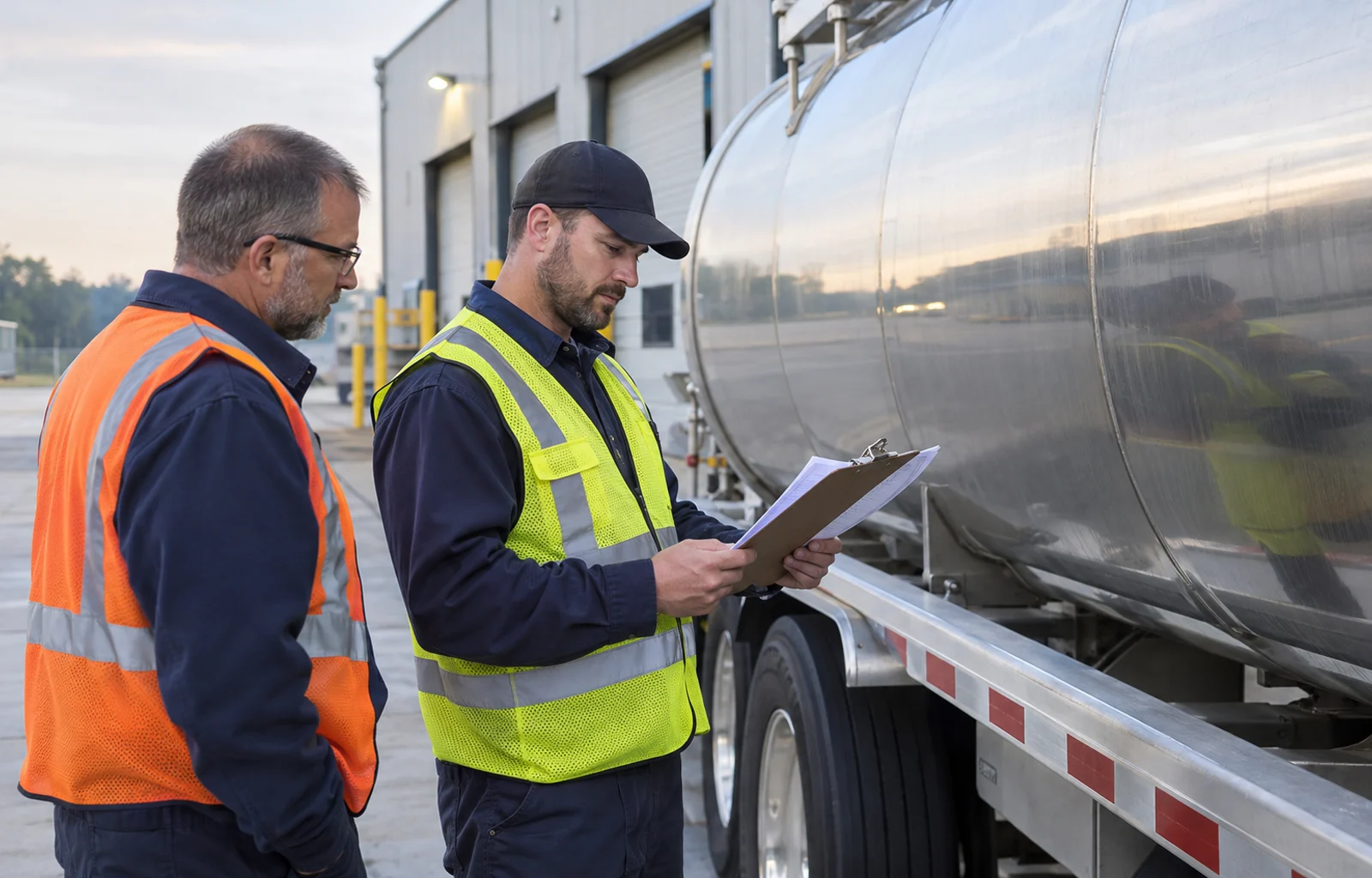
A wash ticket arrives before a bulk food pickup. It shows that a tanker was cleaned, but the tender asks what the tanker last carried. The two questions belong together. The prior cargo tells the shipper what could carry over into the next food. The cleaning record says what was done in between. This resource looks at that handoff under FDA’s existing Sanitary Transportation rule for covered bulk food moves, where the food comes into direct contact with the vehicle, as in a tank truck or hopper.
Under 21 CFR 1.908(b)(4), the shipper must have and use written procedures to keep a previous cargo from making the next food unsafe. The shipper can carry out the measures itself or arrange in writing for a carrier or another party covered by the rule to carry them out. FDA uses a liquid food example to explain why the history matters. If a tanker previously carried a dairy product and is offered for a nondairy shipment, the shipper needs a way to assess whether cleaning addressed the risk of milk allergen carryover. The words ‘food grade’ on an equipment description cannot tell the shipper what the tank carried or what cleaning took place.
The carrier’s specific duties in paragraph (e) apply when the shipper and carrier agree in writing that the carrier is responsible for some or all sanitary conditions during the move. The scope of that agreement matters. Where applicable, paragraphs (e)(4) and (e)(5) require a carrier offering a bulk vehicle to identify the previous cargo and describe the most recent cleaning when the shipper requests that information. The rule also requires applicable written carrier procedures to explain how it will handle those requests. The cited provisions call for information, leaving room for the carrier and shipper to use records that work for their operation.
Here’s a practical dispatch check. Start with the trailer that will actually load, then match its last cargo record and most recent cleaning record to it. Verify the order of events. In a hypothetical dispatch, a tanker was washed on Monday, moved a load on Tuesday and was tendered again on Wednesday. Monday’s ticket may be genuine and still predate the load that matters to Wednesday’s shipper. Likewise, a late trailer swap can make the entire packet refer to equipment parked at another terminal. Ask whether the documents still tell the history of the equipment at the loading bay.
A shipper may need more detail than a timestamp and the word ‘washed’ to compare the work with its cleaning specifications. As an operating practice, decide before dispatch who can obtain the service description, who can confirm which previous cargo was carried, and who at the shipper reviews an unclear result. When equipment has multiple compartments and the shipper’s procedures distinguish them, identify which compartments will load and check that the information covers those spaces. These are suggested checks for matching evidence to the load. The shipper’s food-specific procedures and the written assignment of responsibilities guide the decision.
If dispatch can produce the wash ticket but cannot identify the previous cargo, the next call is to the person who can resolve the missing history under the shipper’s procedure. If the documents disagree about the unit or sequence, hold the loading decision for that review. A short check before the trailer is loaded can keep a valid record for the wrong tank or the wrong day from becoming the basis for releasing the next shipment.