
Understanding what a truck cannot see makes the road safer
Blind spots, stopping distance, and wide turns are not only driver-training topics. They are shared-road knowledge that every road user can apply.
 Keep drivers, dispatch, safety, and maintenance working from one operating view.
Explore Pro FleetSync ↗
Keep drivers, dispatch, safety, and maintenance working from one operating view.
Explore Pro FleetSync ↗
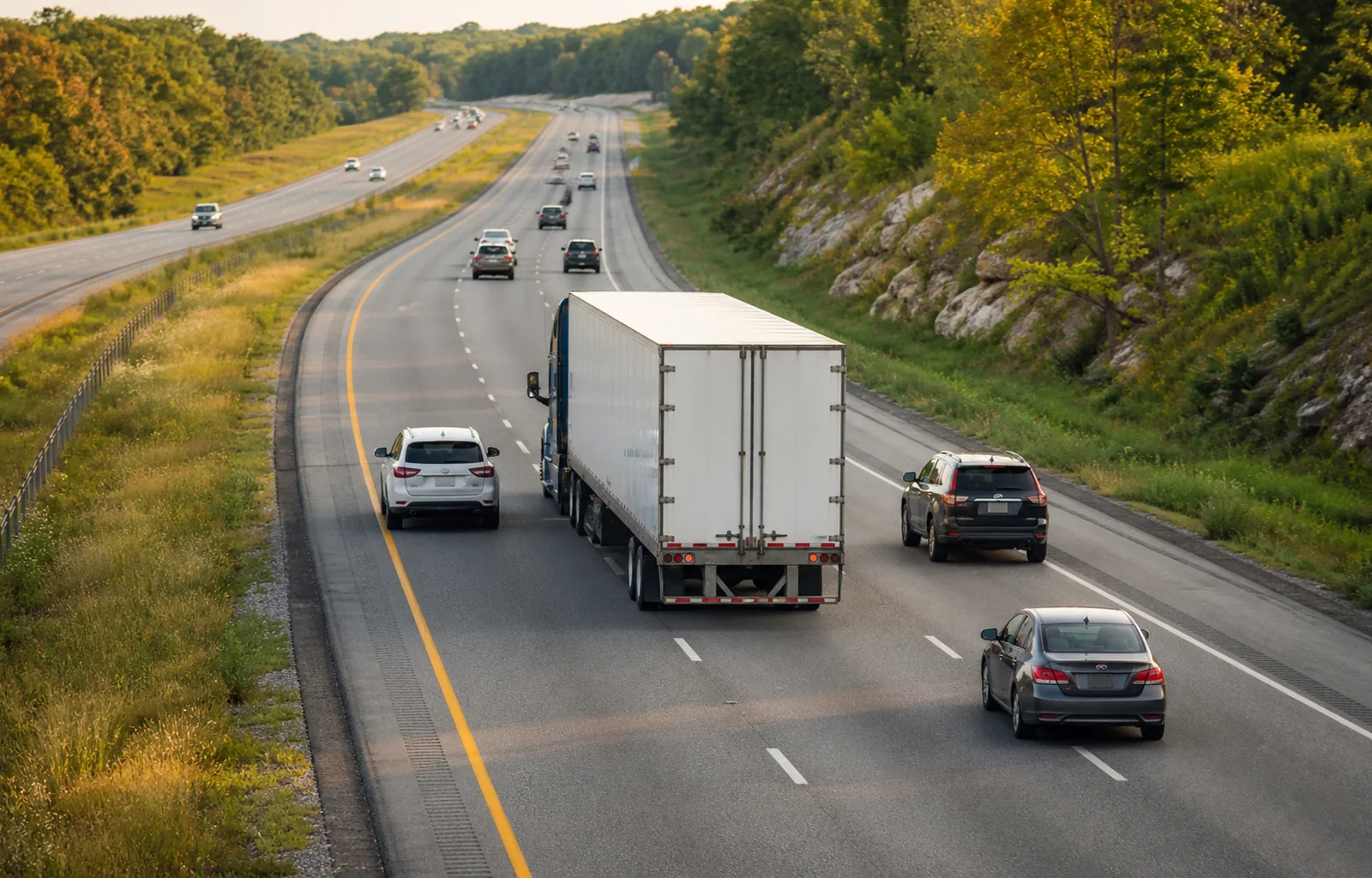
A tractor-trailer and a passenger vehicle may share the same lane, but they do not have the same view of the road. Large blind spots can extend along both sides of a truck, directly behind the trailer, and in front of the cab. A car that remains in one of those areas may be difficult or impossible for the driver to see.
The Federal Motor Carrier Safety Administration's Our Roads, Our Safety campaign emphasizes giving large trucks room, staying visible, and recognizing the space they need to turn and stop. Those ideas are simple, but they become powerful when drivers practice them consistently.
Passing decisively is safer than lingering beside a trailer. Leaving extra following distance helps a driver see changing traffic sooner. Avoiding a cut-in after passing preserves the truck's stopping room. Waiting behind the line at an intersection gives a turning combination vehicle the space its trailer needs.
Professional drivers contribute by signaling early, maintaining predictable lane position, checking mirrors continuously, and expecting that other road users may not understand the truck's limitations. Fleets can reinforce that approach through coaching that includes both technical skill and clear, patient decision-making.
Communities also have a role. Driver education, public messaging, roadway design, and enforcement conversations can all include practical information about safely interacting with trucks. The message is not that one kind of road user owns the road. It is that everyone benefits when the differences between vehicles are understood.
Shared-road safety becomes more than a slogan when each person leaves enough time and space for the other vehicle to make a safe decision.