
Roadside paperwork changed; the repair loop did not
A July rule narrowed when a completed inspection form must go back to the issuing state. The vehicle hold, correction, certification, and retention work still needs one clear owner.

A paperwork change is not a repair waiver. FMCSA's Completed Inspection Report Disposition final rule took effect July 22 and changed one step after a roadside inspection: a motor carrier or intermodal equipment provider now returns the completed inspection form to the issuing state agency only when that agency requests it. The rule did not remove the duties to receive the report, examine it, correct cited violations or defects, certify the corrective work, or retain the record.
The handoff starts with the driver. Under the current text of 49 CFR 396.9, a driver who receives an inspection report must deliver a copy to the operating motor carrier and, when intermodal equipment is involved, the equipment provider upon arriving at the next terminal or facility. If the driver is not scheduled to reach one within 24 hours, the report must be transmitted immediately. A photo buried in a personal message thread or a paper copy waiting in the cab is not a dependable operating process if the people responsible for the vehicle do not receive it.
The carrier then has a defined closeout window. The rule requires the report to be examined, the noted violations or defects to be corrected, and an authorized carrier or provider official to certify the corrections within 15 days of the inspection. The form goes back to the issuing state only if that agency asks for it, but a copy must always be retained for 12 months at the principal place of business or where the vehicle is housed. FMCSA declined to publish a list of states that request returns and told carriers to check the requirements of the states in which they operate. This resource summarizes the federal workflow; it is not legal or compliance advice for a particular inspection or jurisdiction.
An out-of-service finding creates a separate movement boundary. CVSA's current criteria identify critical conditions that place a driver, vehicle, or cargo out of service for a stated period or until the condition is corrected. For a vehicle declared and marked out of service under section 396.9, operation is prohibited until every repair required by the out-of-service notice is satisfactorily completed, and the sticker cannot be removed early. The federal text treats towing as operation except for its specific crane-or-hoist provision and related combination requirements. The inspection report and the applicable order—not schedule pressure or a generic shop assumption—must control what happens next.
Industry sponsor Connect the records, conversations, and follow-up that keep a carrier moving.
See how it works ↗
Connect the records, conversations, and follow-up that keep a carrier moving.
See how it works ↗
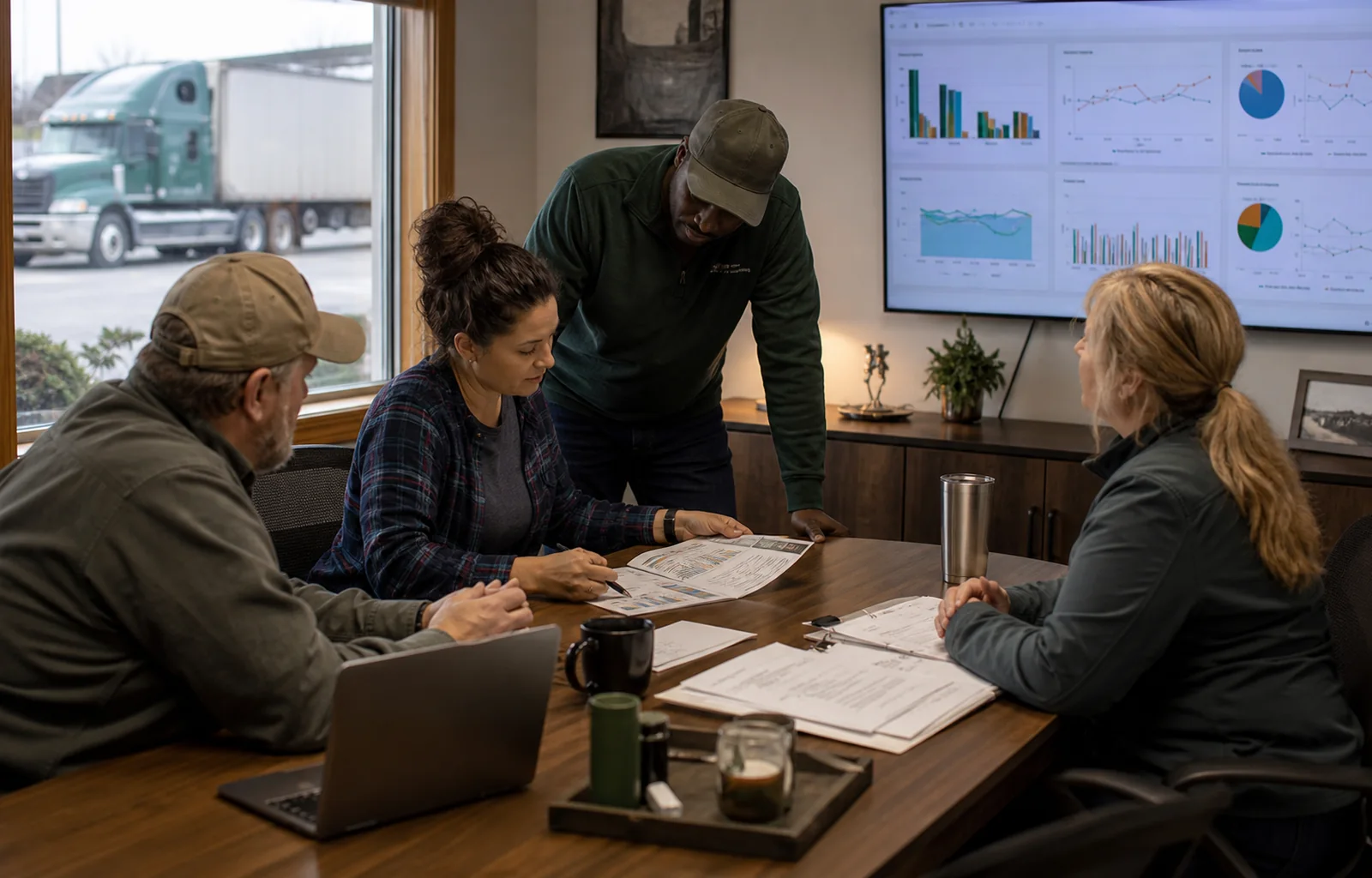
Editorial inference: assign one roadside-response owner as soon as the report arrives. That person should identify the tractor, trailer or intermodal equipment, separate out-of-service items from other cited conditions, preserve the exact report, and coordinate a safe location, qualified repair resource, driver communication, cargo security, replacement equipment, and appointment updates without directing prohibited movement. The owner is not replacing the driver, technician, inspector, or carrier official; the role keeps their decisions from becoming disconnected handoffs.
Build the closeout record around each finding rather than one final checkbox. Editorial inference: link the inspection report to the specific unit, the work order or repair evidence for every item, the person who verified completion, the official who certified the form, the certification date, the issuing agency's return instruction, proof of return when requested, and the 12-month retention location. Those are practical control fields, not a claim that federal rules mandate a particular software screen. The test is whether another responsible person can reconstruct what was held, what was repaired, who released it, and what was sent or kept.
Use the approach of CVSA's August 23-29 Brake Safety Week to run one tabletop exercise that is broader than brakes. Start with a sample roadside report containing one out-of-service item and one other violation. Ask the driver to transmit it, route it to the correct owner, prevent unauthorized movement, arrange repair and load continuity, certify each correction, determine whether the state requests the form, and file the retained copy. A lighter return rule should eliminate unnecessary mailing, not weaken the chain from roadside finding to safe equipment and a complete record.