
A lifting sling needs more than an intact-looking strap
Before a shop hoist takes the weight, check the synthetic web sling’s condition, identification and suitability for the planned lift. Cargo tiedown habits do not answer those questions.
 Turn safety guidance into repeatable fleet work.
See the connected TMS ↗
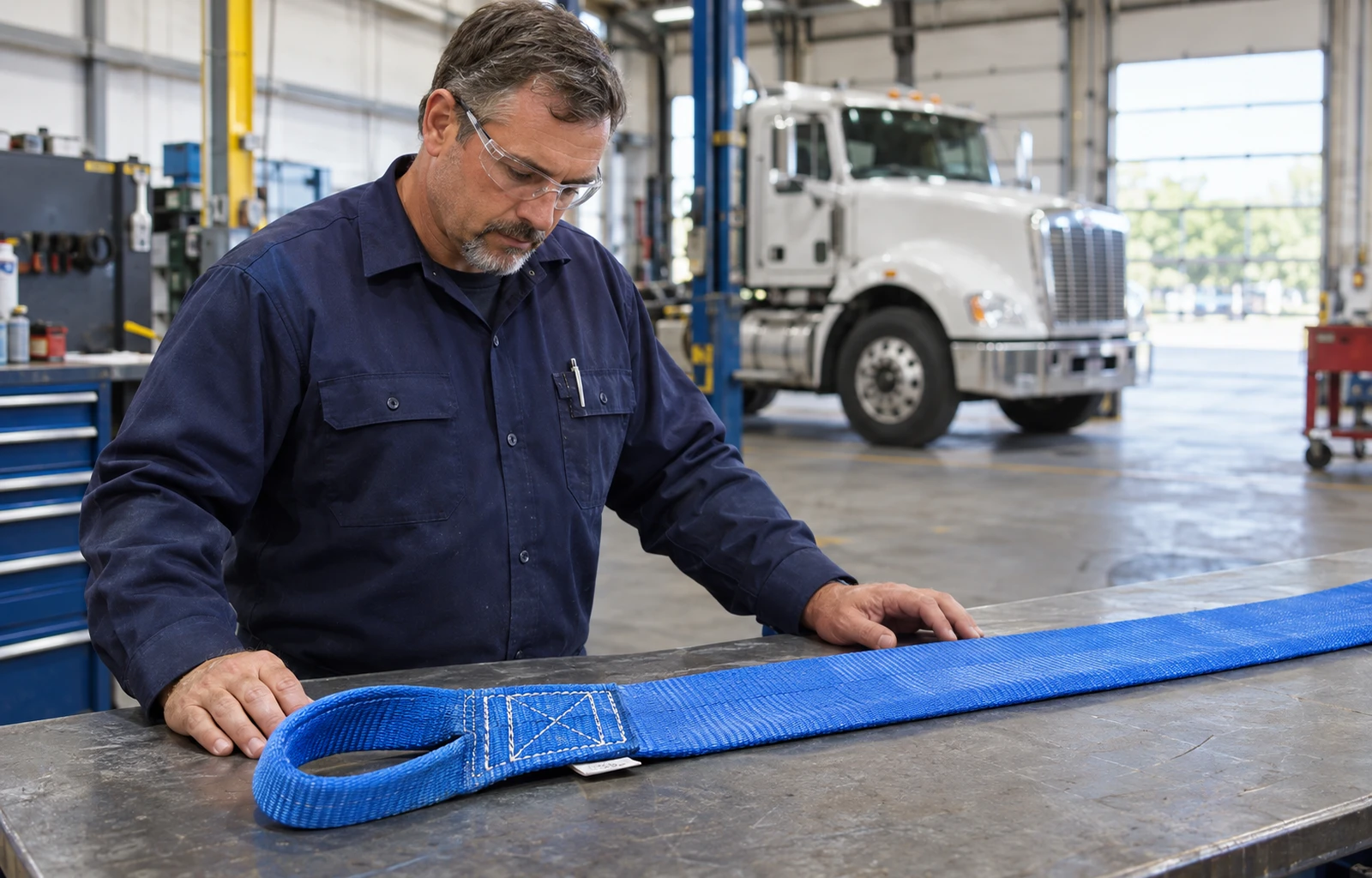
A fleet shop may keep lifting slings near the same equipment used to secure freight, but the next job asks a different question: can this identified sling safely serve this particular hoisting task? A strap that looks intact from across the bay has not answered it. This resource focuses on flat synthetic web lifting slings in general-industry maintenance and materials handling. It explains existing sources checked for this edition, rather than announcing a new rule. Road cargo securement, construction work and other sling materials need their own applicable requirements.
Begin with the person doing the examination. Under OSHA’s 29 CFR 1910.184(d), an employer-designated competent person must inspect the sling, fastenings and attachments each day before use, with further checks during use when conditions warrant. Damaged or defective equipment must leave service immediately. The practical shop question is who has that assignment before a mechanic reaches for a sling. Our recommendation is to make the handoff explicit when equipment moves between bays: identify the responsible examiner rather than assuming someone on the previous job already checked it.
Then separate condition from identification. The federal standard prohibits sling use without affixed, legible identification and requires synthetic web sling markings or coding for hitch capacities and material. Its immediate-removal conditions include chemical burns, melting or charring, snags, punctures, tears, cuts, damaged stitches and distorted fittings. An intact label does not excuse damage, and clean-looking webbing does not supply missing capacity information. For a hypothetical sling found folded on a shared shelf, uncertainty about either issue should stop its selection while the responsible personnel resolve the equipment’s status.
OSHA’s synthetic-web guidance adds useful examination detail, including abrasive wear, brittle or stiff areas and conditions that create doubt about continued use. It recommends removing affected equipment immediately and consulting the manufacturer or a qualified person about the application and chemical environment. That guide combines standards with advisory information; its recommendations should not all be described as separate federal mandates. For a fleet’s own review, make enough room to examine the unloaded sling and attachments thoroughly. A rack inventory or purchase receipt answers a different question from the condition of the item now on the bench.
A condition check also does not select the lift. OSHA’s guidance explains that rated capacity depends on factors including hitch, loading angle and curvature where the sling bears. Its operating guidance addresses load control, edge protection and keeping people away from suspended loads. Our recommendation is to resolve those matters with the manufacturer’s information and appropriately qualified personnel before committing equipment. A number remembered from a previous straight lift is not a sound basis for approving a changed arrangement. This article supplies no rigging calculation or permission to attempt a lift.
Keep the uncertain sling from silently returning to the shared rack. We recommend a clearly separated holding location and a handoff that identifies the sling, the concern and who will decide its disposition. That is an editorial workflow suggestion, not a prescribed federal form. The standard bars temporary sling repairs; tape or improvised stitching is not a route back into use. The useful endpoint is two decisions made before the hoist takes weight: an identified sling has passed the applicable examination, and competent planning has matched suitable equipment to the actual task. If either remains unresolved, change the plan before moving the load.