
First responders and automated vehicles need a roadside playbook
New vehicle technology still has to respond safely when a fire truck, police officer, work zone, or unexpected road closure changes the plan.
 From the road to the back office, keep every handoff visible.
Take a closer look ↗
From the road to the back office, keep every handoff visible.
Take a closer look ↗
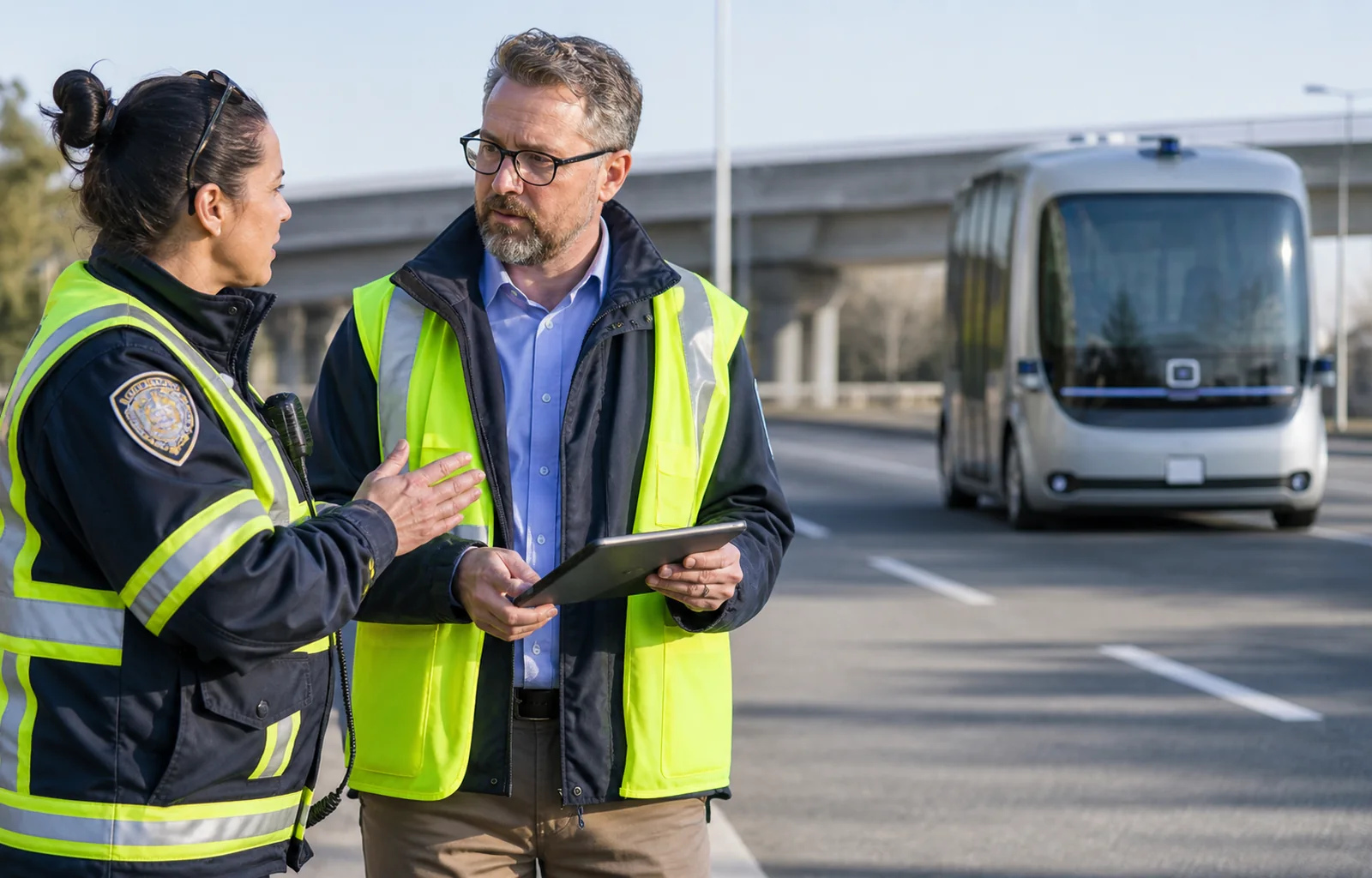
Automation can perform well in a planned operating environment and still face a difficult moment when an emergency changes the road. Police officers, firefighters, emergency medical teams, tow operators, and highway workers regularly create temporary traffic patterns that do not look like an ordinary lane or signal.
The National Highway Traffic Safety Administration has emphasized that automated vehicles must interact safely with first responders. That expectation reaches beyond detecting flashing lights. A vehicle may need to recognize hand signals, temporary cones, a blocked lane, a responder approaching the vehicle, or an instruction that conflicts with the normal route.
For developers and fleet operators, the practical question is what happens when the system is uncertain. The vehicle needs a safe fallback, a way to communicate its state, and a reliable path for a trained person to respond. A roadside delay can be managed; an unpredictable movement around responders cannot.
Local agencies also benefit from knowing which automated systems operate in their area and how to contact the responsible operator. Pre-incident conversations can identify emergency numbers, disable procedures, expected lighting or display signals, and the safest way to approach the vehicle.
Commercial fleets evaluating advanced automation should ask for evidence of this behavior. Demonstrations should include construction zones, incident scenes, police direction, lane closures, and communications failures—not only clean highway operation.
Drivers and dispatchers still need a role in the playbook. They should know when automation is active, how an escalation reaches them, what information the responder may need, and how the event is recorded for later review.
A safe roadside relationship is a shared design problem. Technology companies, carriers, and public agencies need compatible expectations before the unusual moment arrives.