
Dock safety has to cross the trailer door
OSHA renewed its warehouse and distribution-center emphasis program. A useful response connects the yard, driver, trailer, dock, forklift, pedestrian path, and emergency plan instead of reviewing each one in isolation.
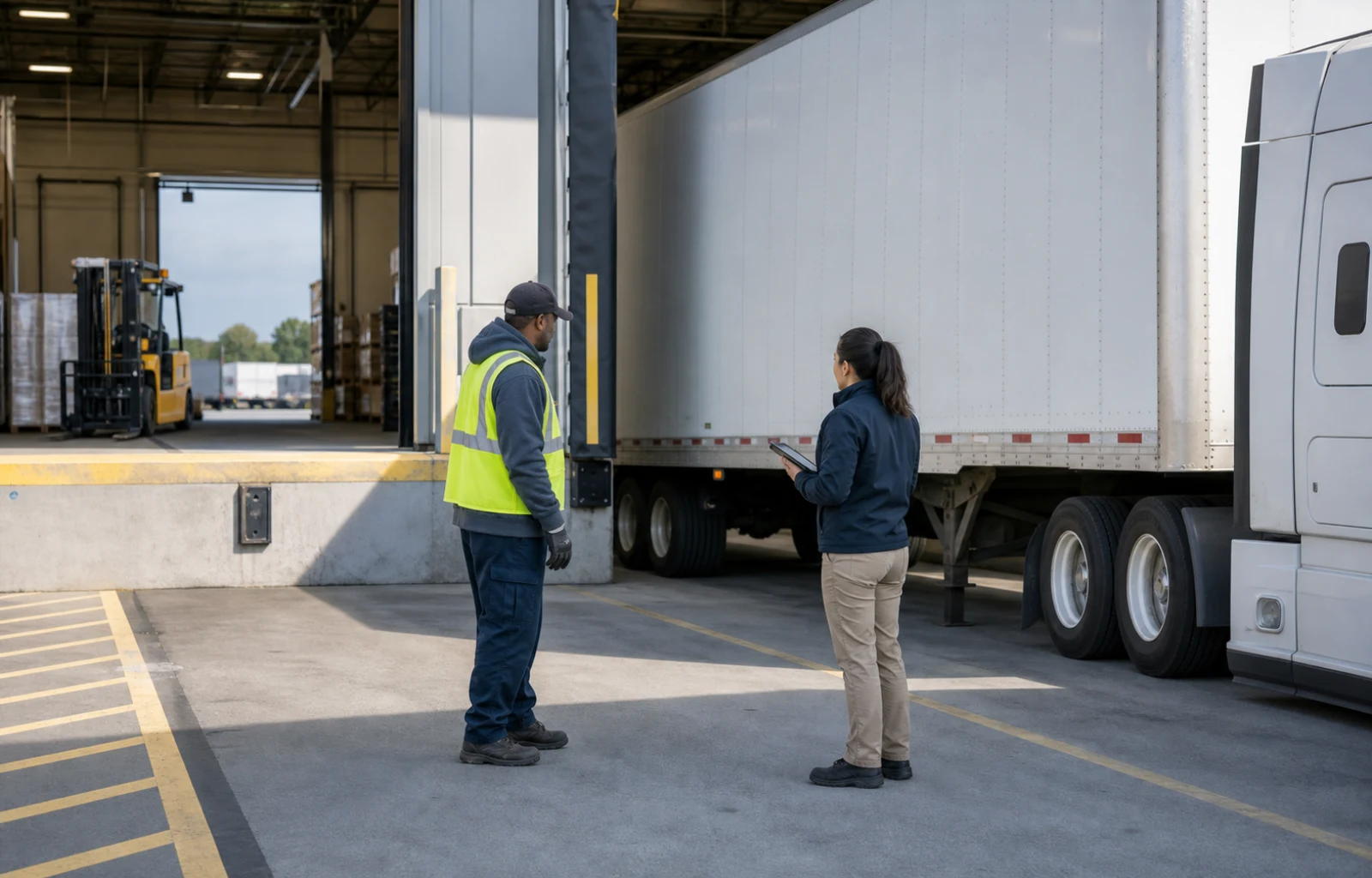
A loading dock is not one workplace with one moving part. It is where a road vehicle, a trailer, powered material-handling equipment, warehouse employees, drivers, visitors, freight, schedules, and emergency routes meet. OSHA's renewed National Emphasis Program for Warehousing and Distribution Center Operations took effect July 31. It calls for comprehensive safety inspections focused on common hazards that include powered industrial vehicles, material handling and storage, walking-working surfaces, means of egress, heat, ergonomics, and fire protection.
The program's scope needs to be read precisely. Its listed industries are postal processing and distribution centers, couriers and express delivery services, local messengers and local delivery, and four warehousing and storage categories. General freight trucking is not one of the listed industry codes. A carrier should not assume either that every terminal is targeted by this program or that a trucking label removes a separately classified warehouse, courier, or local-delivery operation from consideration. State Plans may also adopt an identical or different program. This resource is practical editorial analysis, not legal advice or a determination of coverage for a particular establishment.
OSHA says injury and illness rates in the covered industries remain above the private-industry average, and the agency found more than 1,700 violations during the first 18 months of the earlier program. The renewed directive lasts five years. It removed high-injury retail establishments from the program and removed mandatory screening requirements for heat and ergonomic hazards, while continuing to identify heat and ergonomics among the common hazards inspectors may encounter. That distinction matters: a changed inspection instruction is not evidence that the underlying work disappeared.
Start the review before a driver reaches the door. Editorial inference: give the appointment or dispatch brief the correct entrance, check-in method, staging location, yard speed and traffic pattern, required protective equipment, safe walking route, dock assignment process, and one contact for a condition that does not match the brief. The purpose is not to shift the warehouse's responsibilities to the driver. It is to prevent a visiting worker from learning a mixed vehicle-and-pedestrian environment by trial and error.
Industry sponsor Connect the records, conversations, and follow-up that keep a carrier moving.
See how it works ↗
Connect the records, conversations, and follow-up that keep a carrier moving.
See how it works ↗
At the bay, make trailer movement and dock access one coordinated control. OSHA's warehouse guidance says dockboards should be maintained and secured against unsafe movement, and measures such as wheel chocks or sand shoes should prevent a truck or trailer from moving while workers are on the dockboard. It also calls for safe clearances, warnings near dock edges, and separation from forklift and pedestrian hazards. Editorial inference: the carrier and facility should agree on who confirms the trailer is positioned and restrained, what signal authorizes loading, who may remove the restraint, and how either side stops the work when the status is uncertain.
Walk the path, not just the paperwork. Begin where the truck enters, follow the driver to check-in, continue through any dock or freight area the driver may access, and finish at the exit. Look for crossing vehicle paths, blind corners, open dock edges, damaged or shifting dockboards, slippery surfaces, blocked aisles, obstructed exits, unstable freight, charging areas, and places where a driver could enter active forklift space without a clear boundary. OSHA's guidance also connects receiving and shipping work to dock transitions, material-handling strain, emergency planning, and accessible exit routes.
Give the handoff a stop-and-report method that works in real time. Editorial inference: a driver, dock worker, or supervisor should be able to name the bay or location, describe the observable condition, pause the affected movement without improvising a repair, and reach the person who can control the yard, trailer, dock, or equipment. Record what protected people immediately, who owns the correction, and how the area will be released. A photo or message can support the record, but it should not be the only control while equipment is still moving.
Use one short drill to test the joins. Put a secured trailer at a bay, then simulate a changed dock assignment, an unclear restraint signal, a pedestrian entering the forklift route, and an obstructed exit discovered during the walk-through. Ask the driver, dock lead, and yard contact to show who stops which movement, how they communicate, where people wait safely, and who confirms the correction. The useful outcome is not a perfect checklist. It is a shared operating picture that still makes sense when the appointment changes, the usual contact is absent, or the person raising the concern works for a different company.