
The next shift needs its own shop-cord check
A portable tool that still runs can have a damaged cord. Fleet shops need to distinguish the shift-use inspection, the narrow stationary-equipment exception and the decision to return damaged equipment to service.
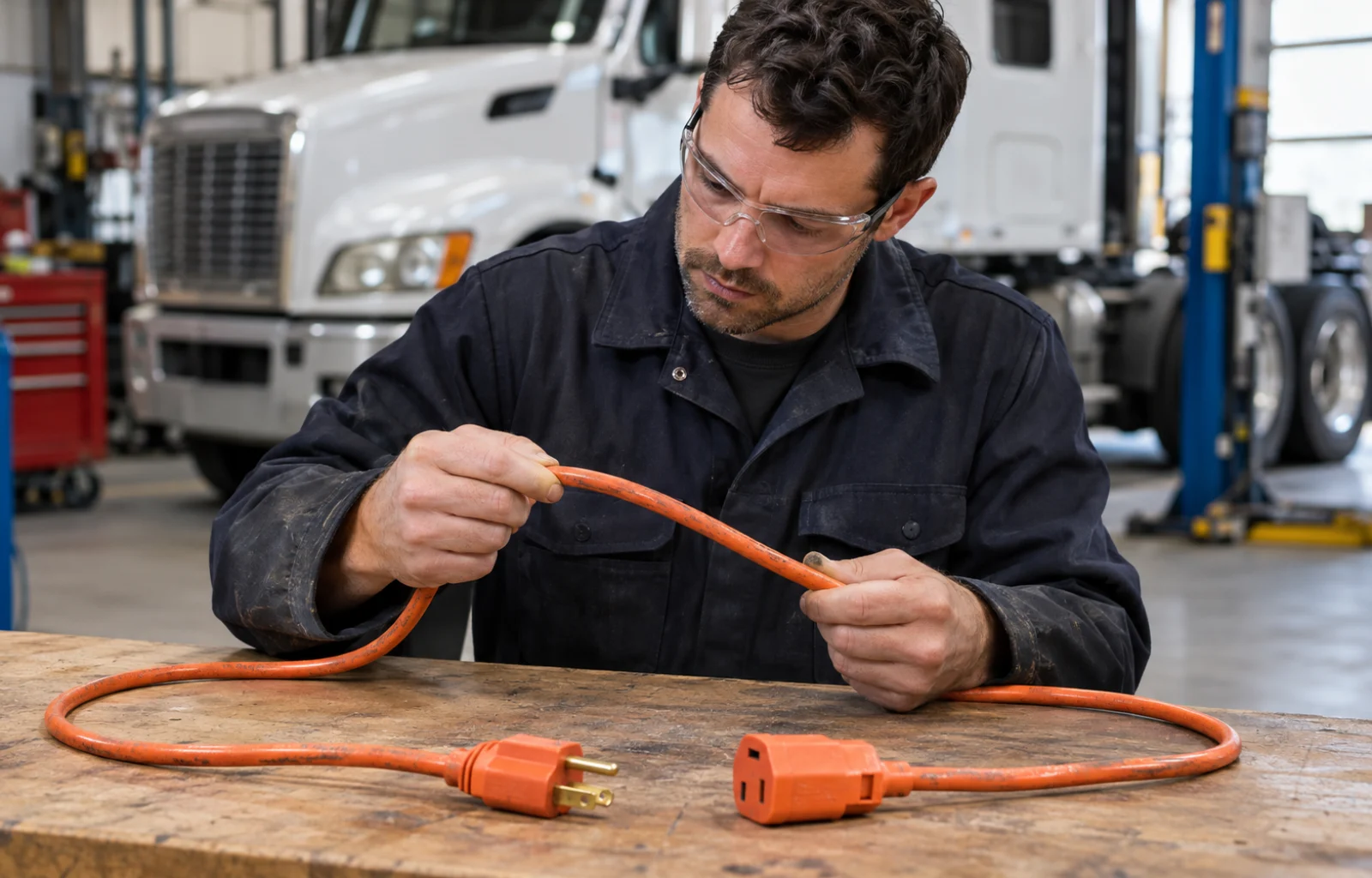
A corded tool moves from one truck bay to another, and the orange extension cord follows it. The motor ran on the previous job. What must happen before the next shift uses that equipment? For fleet maintenance teams, the answer starts with the cord and plug, rather than a successful trigger test. This resource explains existing general-industry electrical requirements checked for this edition. It reports no new rule and does not provide electrical repair instructions. Construction work and specialized electrical tasks require their own applicable review.
OSHA’s 29 CFR 1910.334(a)(2) calls for a visual inspection before portable cord-and-plug equipment or extension cords are used on any shift. The examination covers external defects and signs that damage may extend inside. Loose components, distorted or absent plug pins, damaged insulation and a crushed jacket are among the concerns identified in the rule. A tool’s ability to start does not resolve those questions. For a hypothetical shared-shop handoff, our recommendation is to make the inspection part of taking the tool into use, rather than treating the previous operator’s successful job as clearance.
The exception is narrower than “it was already plugged in.” The same section excuses repeated visual inspection until relocation only when equipment remains connected after placement and is not exposed to damage. A cord moving around vehicle wheels, bay doors or other shop activity cannot be assumed to meet those conditions. Ask what actually happens to that particular setup. This distinction gives a supervisor a more useful question than whether every cord has an inspection sticker: is it portable equipment entering use on this shift, or does the actual arrangement meet both conditions of the exception?
When a defect or damage evidence could expose an employee to injury, the federal rule requires removal from service. Use cannot resume until the repairs and tests needed to make the equipment safe have occurred. Virginia Tech’s electrical-safety guidance likewise separates inspection from repair and testing. Our proposed shop practice is to identify the affected item and keep it out of the shared supply while the responsible personnel determine its disposition. Moving a questionable cord to the far end of a bench leaves the next person with an ambiguous choice. A verbal warning at shift change is easy to lose.
Industry sponsor Connect the records, conversations, and follow-up that keep a carrier moving.
See how it works ↗
Protect the replacement arrangement as well. Oregon OSHA emphasizes that extension cords supply temporary power and calls attention to jacket damage and crushed sections during inspection. Virginia Tech’s guidance addresses protecting cords at doors and other damage points. For a fleet shop, the editorial takeaway is to review where the cord travels before simply fetching another one from the rack. If the same doorway or moving equipment will damage its replacement, the immediate exchange has left the cause in place. Have the appropriate personnel resolve routing and equipment suitability; this resource does not prescribe a wiring design.
OSHA’s handling provisions prohibit lifting or lowering equipment by its flexible electric cord and hanging cords in ways that can damage their insulation or jacket. The standard also protects grounding continuity and requires equipment approval for applicable wet or conductive locations. Those checks belong in the work plan alongside condition, rather than being inferred from a familiar plug shape. Our suggested closeout is a clear decision: suitable equipment is available, the shift-use inspection has been addressed, and any removed item has a controlled disposition. Keep repair and testing decisions with personnel qualified for the work.