
A hearing protector’s package rating is not a personal fit result
Fleet shops need to connect noise exposure with the protection an individual technician actually receives. Fit testing, coaching and compatible equipment answer different questions from the number on the box.
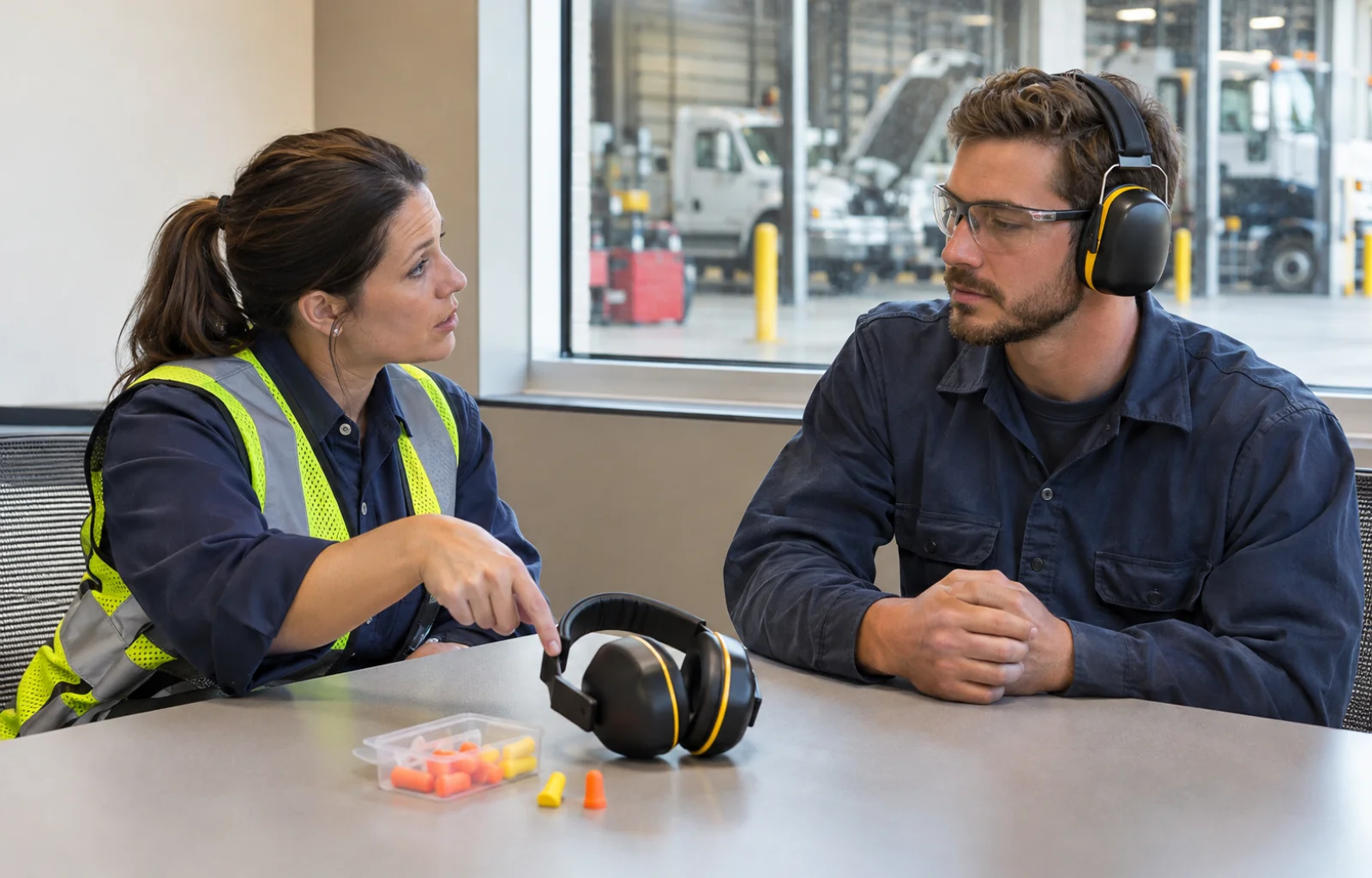
A box of earplugs can carry a noise reduction rating without establishing the protection a particular technician receives. For a fleet shop that has assessed noise exposure, the next useful question is personal: can this worker obtain adequate protection with this device while wearing the other equipment the job requires? This resource examines current federal guidance and an existing NIOSH recommendation. It reports no new rule, no shop measurements and no test of a particular product. The focus is the decision between selecting a protector from its specifications and verifying how it fits its user.
NIOSH’s January 2025 science policy update recommends individual quantitative fit testing to evaluate hearing protector attenuation. It supersedes the agency’s older guidance on derating package ratings. A test can produce a personal attenuation rating, or PAR, describing sound reduction for that worker with that protector, or show that a specified protection level was achieved. NIOSH identifies individualized training as necessary for fit testing to improve the attenuation workers obtain. Our practical reading: a disappointing result should start a coaching and selection conversation, rather than become a permanent judgment that an employee cannot use hearing protection.
The recommendation and the federal standard have different roles. OSHA section 1910.95 requires employers to evaluate attenuation for the particular noise environment using a method in mandatory Appendix B. Employers must also ensure proper initial fitting and supervise correct use. Appendix B cautions that calculated protection depends on proper fitting and wearing. NIOSH’s recommendation does not, by itself, rewrite those OSHA requirements. The shop’s responsible hearing-conservation professional should resolve the applicable evaluation method; a purchaser should not assume that a PAR printout alone completes the compliance review.
NIOSH’s practical guidance calls for a quiet testing location, a choice of devices and personal fitting instruction. If protection is insufficient, provide additional instruction, repeat the test and try other devices when necessary. Document the worker’s ability to obtain adequate protection with the selected device. It also identifies compatibility problems between hearing protectors and equipment such as eye protection, respirators and head protection. Communication matters too: workers may need to understand speech or recognize equipment sounds. Choosing protection therefore involves the actual assignment, not simply seeking the largest package number.
Industry sponsor From the road to the back office, keep every handoff visible.
Take a closer look ↗
Consider a hypothetical technician who uses earmuffs successfully in a training room, then adds different eye protection for a repair assignment. Our editorial recommendation is to bring the full equipment combination into the selection discussion before treating the earlier result as sufficient evidence for that job. Ask the responsible professional whether the combination affects fit or requires another evaluation. Do not solve an interference problem by dropping required eye protection. Likewise, a worker who repeatedly removes protection to communicate needs a review of the work and communication arrangements, rather than an undocumented instruction to tolerate the problem.
A useful proposed shop record would connect the worker, device model and size, relevant task, test method and result, fitting instruction, and the reviewer’s next action. These are editorial suggestions, not a newly prescribed federal form. Keep the record specific enough that another supervisor can identify which protector was evaluated; a note saying only “earplugs issued” cannot answer that question. If the device changes, the worker reports difficulty, or the job’s equipment combination changes, send that information to the program owner. Ask what the existing evidence covers before assuming it transfers.
The purchasing decision is complete only when it reaches daily use. Make the selected device available where the work requires it, make the fitting instruction usable, and give workers a clear route to report problems. Hearing protection remains part of a wider noise-control and hearing-conservation effort. A package rating, an exposure assessment and an individual fit result each contribute different evidence; the shop needs someone responsible for connecting them to the same worker and assignment.