
Cargo theft defense starts with a verified handoff
A load is safest when the carrier, shipper, broker, driver, equipment, and destination are confirmed through trusted channels before anyone releases or redirects the freight.
 Keep drivers, dispatch, safety, and maintenance working from one operating view.
Explore Pro FleetSync ↗
Keep drivers, dispatch, safety, and maintenance working from one operating view.
Explore Pro FleetSync ↗
Cargo theft is not limited to a cut lock or a missing trailer. A convincing email, a changed pickup instruction, a borrowed motor-carrier identity, or a driver sent to the wrong address can move freight into the wrong hands without an obvious break-in. That makes the release decision a security control: before cargo moves, every party should know who is authorized, what equipment should arrive, and how an unexpected change will be challenged.
The FBI's April 2026 public-service announcement said estimated cargo-theft losses in the United States and Canada reached nearly $725 million in 2025, up 60 percent from 2024, while confirmed incidents rose 18 percent. Those are the FBI's cited estimates, not a complete count of every loss. More important for day-to-day operations, the agency describes schemes that compromise broker or carrier accounts, post fraudulent loads, alter shipment documents, and redirect freight through people who may not understand the larger plot.
A useful plan accounts for four different problems. Straight theft removes freight from a truck, yard, warehouse, or parking location. Strategic theft uses deception to persuade a legitimate participant to release or redirect it. Cyber-enabled theft supplies the stolen account, spoofed message, or malicious link that makes the deception credible. Pilferage removes only part of a shipment and may hide the loss behind changed paperwork. One padlock cannot address all four, so the process needs physical security, identity checks, cyber hygiene, and an intact record of custody.
Start with a trusted-contact layer before the load is offered. Keep the company's public FMCSA record and phone number accurate, maintain an internal list of independently confirmed broker and shipper contacts, require multi-factor authentication on email and freight platforms, and limit who can change account, payment, pickup, or destination details. FMCSA warns that search results, insurance certificates, and familiar-looking contact information can be false. A callback should use a number already verified from an authoritative record or established business relationship, not the number supplied in the message being questioned.
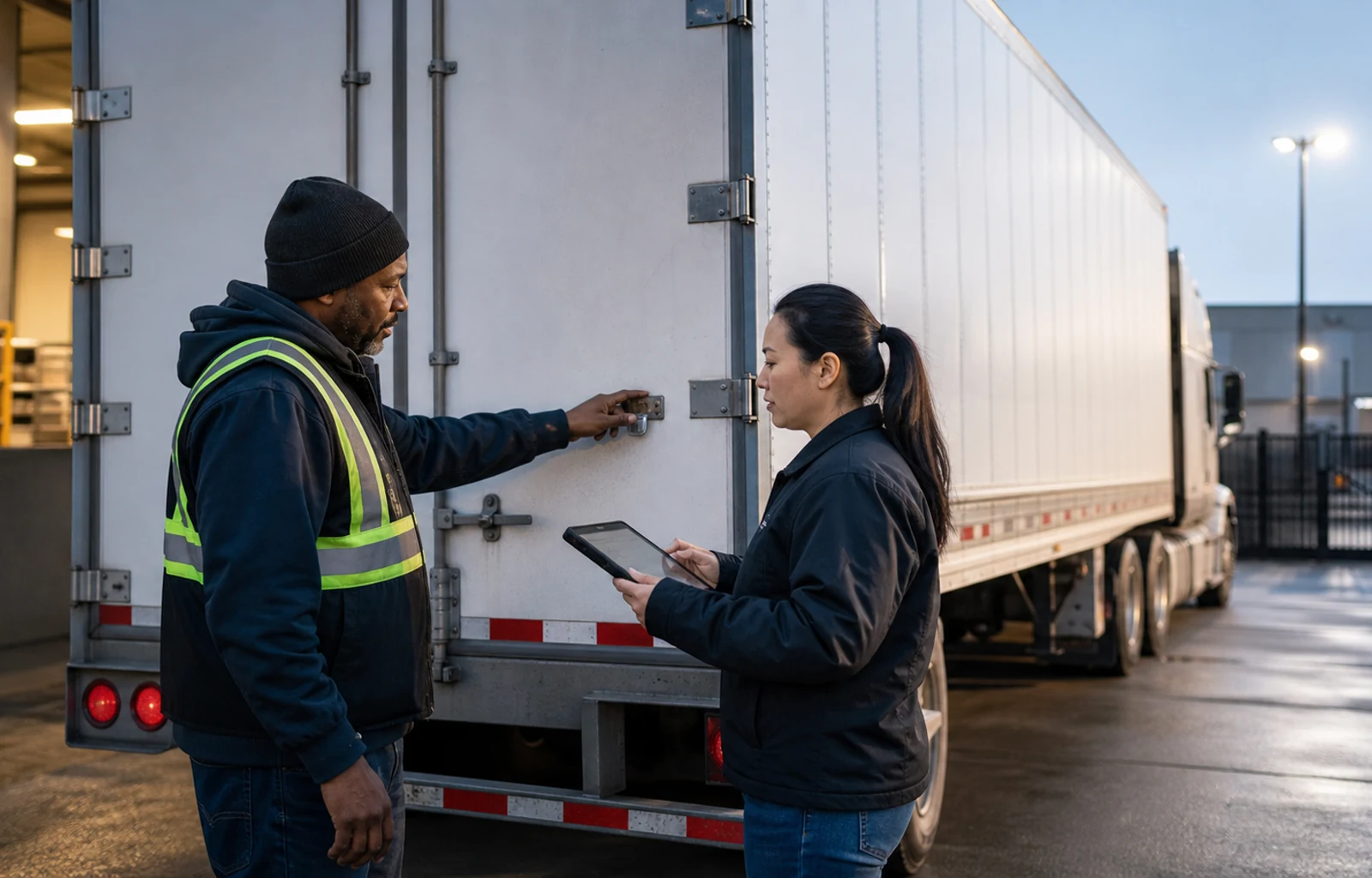
At pickup, the shipping location and carrier should work from the same release checklist. Match the expected carrier name, driver, tractor, trailer, and pickup credential to the dispatch record; resolve a substitution before loading; and record the identifiers the business legitimately needs. The FBI specifically recommends positive driver and equipment identification and a secure pickup number. Sensitive identity records should be access-controlled and retained under the company's established legal and privacy policy, rather than copied into an open group chat or personal phone.
Treat a destination change, urgent cross-dock request, new payment instruction, or last-minute contact swap as a fresh authorization event. The person receiving the change should pause the transaction and confirm it through the original trusted channel. Editorial inference: a short, documented stop-work rule is more dependable than asking a driver or dock employee to judge whether a polished message feels authentic. Dispatch should also tell drivers where they can park safely while an instruction is checked and who covers the decision outside normal office hours.
If freight is missing, diverted, or tied to a suspected account compromise, protect people first and preserve the record. Call 911 for immediate danger, make a local or state police report, and follow the FBI and IC3 reporting paths for cargo theft or cyber-enabled schemes. Save the original messages, headers, call details, platform records, shipment documents, vehicle information, and timeline without altering them. Notify the appropriate insurer and affected business partners through known contacts. FMCSA also directs identity-theft victims to correct public contact data and alert relevant load boards, factoring companies, and other parties; it cautions that legitimate carriers and brokers can both be victims.
Test the plan with one ordinary load and one exception. Ask who verifies the booking, who may release the freight, how a substitute driver is approved, where the callback number comes from, who can authorize a destination change, what the driver does after hours, and which records are preserved after an attempt. The goal is not to make every employee investigate fraud. It is to create a chain of custody in which a questionable handoff can stop calmly, reach a trusted person, and resume only after the identity and instruction are verified.