
Build one release gate around the hazmat load
CVSA's latest North American inspection results connect critical failures across cargo, papers, markings, securement, credentials, and emergency access. Reconcile them before dispatch, not one department at a time.
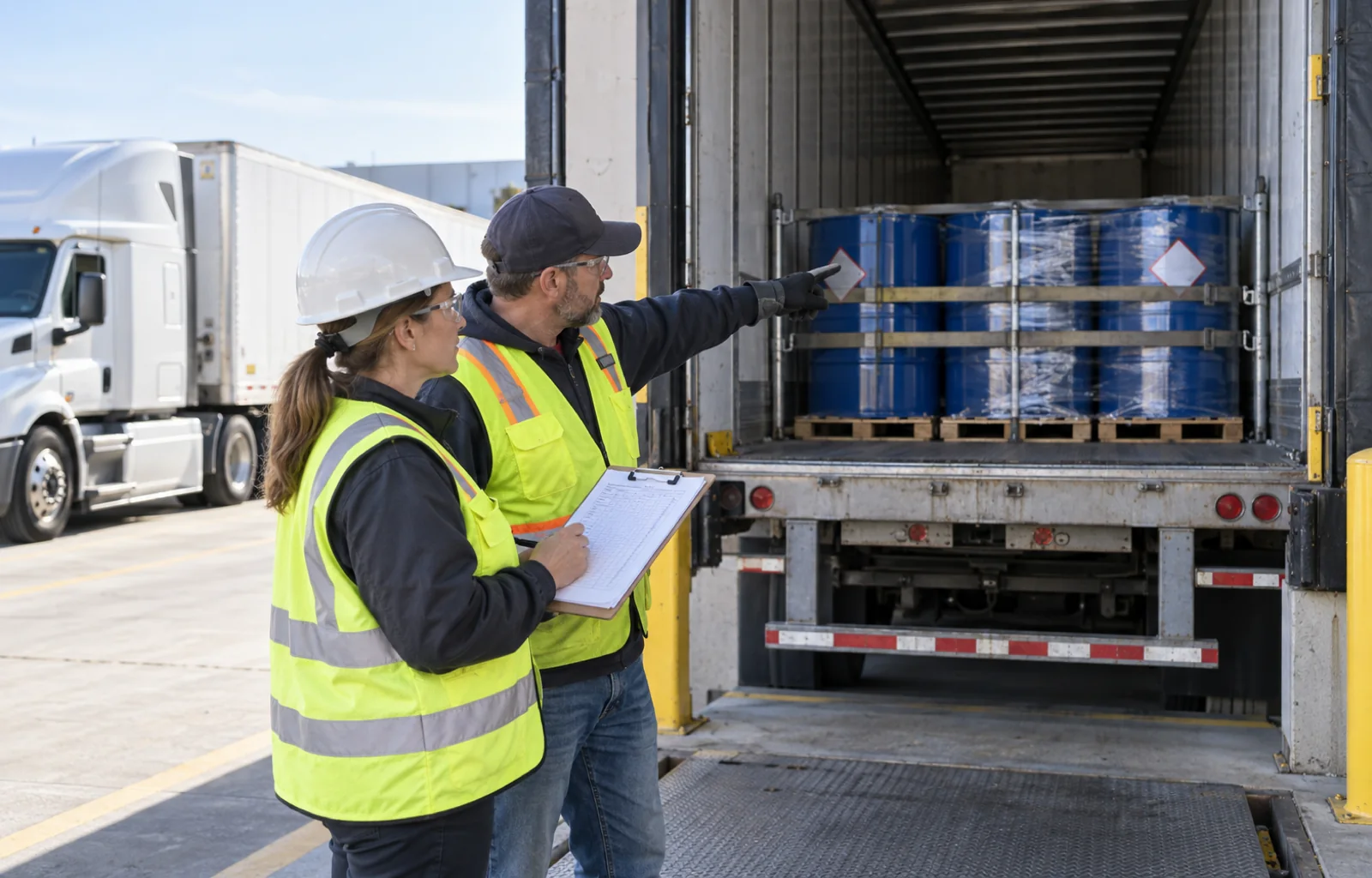
A hazardous-materials load can be correct in one system and still fail as a complete movement. The Commercial Vehicle Safety Alliance reported September 10 that inspectors in the United States and Canada conducted 5,046 hazardous-materials and dangerous-goods inspections during an unannounced five-day initiative in June. Inspectors placed 683 vehicles out of service, a combined rate of 13.5 percent, while documenting problems involving securement, shipping papers, hazard communication, package integrity, emergency information, registration, permits, and endorsements. The useful carrier response is not a one-week inspection campaign. It is a load-specific release decision before dispatch. This resource is operational editorial analysis, not legal advice for a particular shipment.
Treat the result as a review trigger, not a fleet benchmark. The initiative combined different inspection types and two national regulatory systems; CVSA reported 4,122 U.S. inspections with 500 vehicles placed out of service and 924 Canadian inspections with 183 placed out of service. The release does not describe a random sample or provide enough vehicle-level detail to turn its percentage into an expected result for one carrier. A CVSA decal has a similarly bounded meaning: it reflects that an eligible inspection found no critical vehicle or specification cargo-tank violations at that time. It is not proof that every document, package, later load, or future trip is compliant.
Start the gate where the carrier accepts the shipment. Part 172 of the federal Hazardous Materials Regulations applies to people who offer hazardous material for transportation and to carriers that transport it. Section 177.801 separately says a motor carrier may not accept or transport a forbidden material or hazardous material that is not prepared in accordance with the rules. The offeror may own classification, packaging, and shipping-paper work, but a handoff does not erase the carrier's duties. Editorial inference: name the person authorized to stop acceptance, identify the qualified shipper contact who can correct a discrepancy, and do not let appointment pressure convert an unresolved question into a dispatch instruction.
Reconcile the physical load with the communication package. CVSA counted 265 shipping-paper violations, including 57 out-of-service violations; 197 placard violations, including 55 out-of-service violations; and 64 marking violations, including 20 out-of-service violations. Those counts are not interchangeable and should not be added into a fleet failure rate. They do show why a generic 'hazmat paperwork present' checkbox is weak. Editorial inference: for the exact load, compare the material description, quantity and package information, markings, labels, required placards, shipper certification, emergency-response number, and any applicable exception. Then confirm the driver knows which paper controls and where it must remain accessible during an inspection or incident.
Industry sponsor Build stronger carrier workflows without another disconnected spreadsheet.
Meet Pro FleetSync - TMS ↗
Build stronger carrier workflows without another disconnected spreadsheet.
Meet Pro FleetSync - TMS ↗
Give package condition and securement their own physical release. Inspectors documented 29 out-of-service leaking-package violations and 128 out-of-service cargo-securement violations. Section 177 places highway-carriage responsibilities alongside the requirements in parts 171, 172, 173, 178, and 180; the applicable standard changes with the material, package, vehicle, quantity, and operation. Editorial inference: inspect for leakage, damage, closure condition, incompatible or unstable loading, and movement risk using the procedure and trained people appropriate to that shipment. Record the correction or rejection rather than moving a questionable package aside and releasing the remainder without rechecking the load configuration.
Make emergency information an access test, not a document count. CVSA reported 73 U.S. emergency-response-information violations. Sections 172.600 and 172.602 require applicable emergency information to be immediately available while the material is present and accessible to the driver and responders; the information covers the material, immediate health hazards, fire or explosion risks, precautions, response methods, spill or leak handling, and preliminary first aid. Section 172.604 adds requirements for the emergency-response telephone number, including continuous monitoring while the material is in transportation. Editorial inference: test the actual paper or electronic path from the driver's seat, after hours, with weak connectivity, and with someone other than the person who assembled the load.
Keep credentials tied to the shipment rather than to a broad company profile. CVSA also reported 47 hazardous-materials registration violations, eight federal hazardous-materials safety-permit violations, and 16 endorsement violations. PHMSA registration, an FMCSA safety permit, a driver's endorsement, and function-specific training answer different questions and apply under different thresholds or roles. Editorial inference: the release check should identify the carrier, vehicle, driver, material and quantity, then verify only the registrations, permits, endorsements, training, and route or operating conditions that the actual movement requires. A valid credential in one lane does not cure a missing or inapplicable credential in another.
Close with one release record and reopen it when the load changes. Editorial inference: give one qualified owner a concise load-level checklist that links the offeror's information, physical inspection, hazard communication, papers, emergency access, credentials, exceptions, unresolved discrepancies, and final release. Preserve who checked what and when without copying sensitive or unnecessary information into uncontrolled notes. If the material, quantity, package, trailer, driver, route, paper, placard, emergency contact, or operating condition changes, route the movement back through the affected checks. The finish line is not a perfect-looking folder or a decal from a prior inspection. It is a defensible decision that this load, in this vehicle, with this driver and information, is ready to move.