
Brake drums and rotors deserve their own maintenance conversation
Brake Safety Week will place added attention on drums and rotors. Fleets can use that focus to strengthen routine inspection and repair work now.
 Connect the records, conversations, and follow-up that keep a carrier moving.
See how it works ↗
Connect the records, conversations, and follow-up that keep a carrier moving.
See how it works ↗
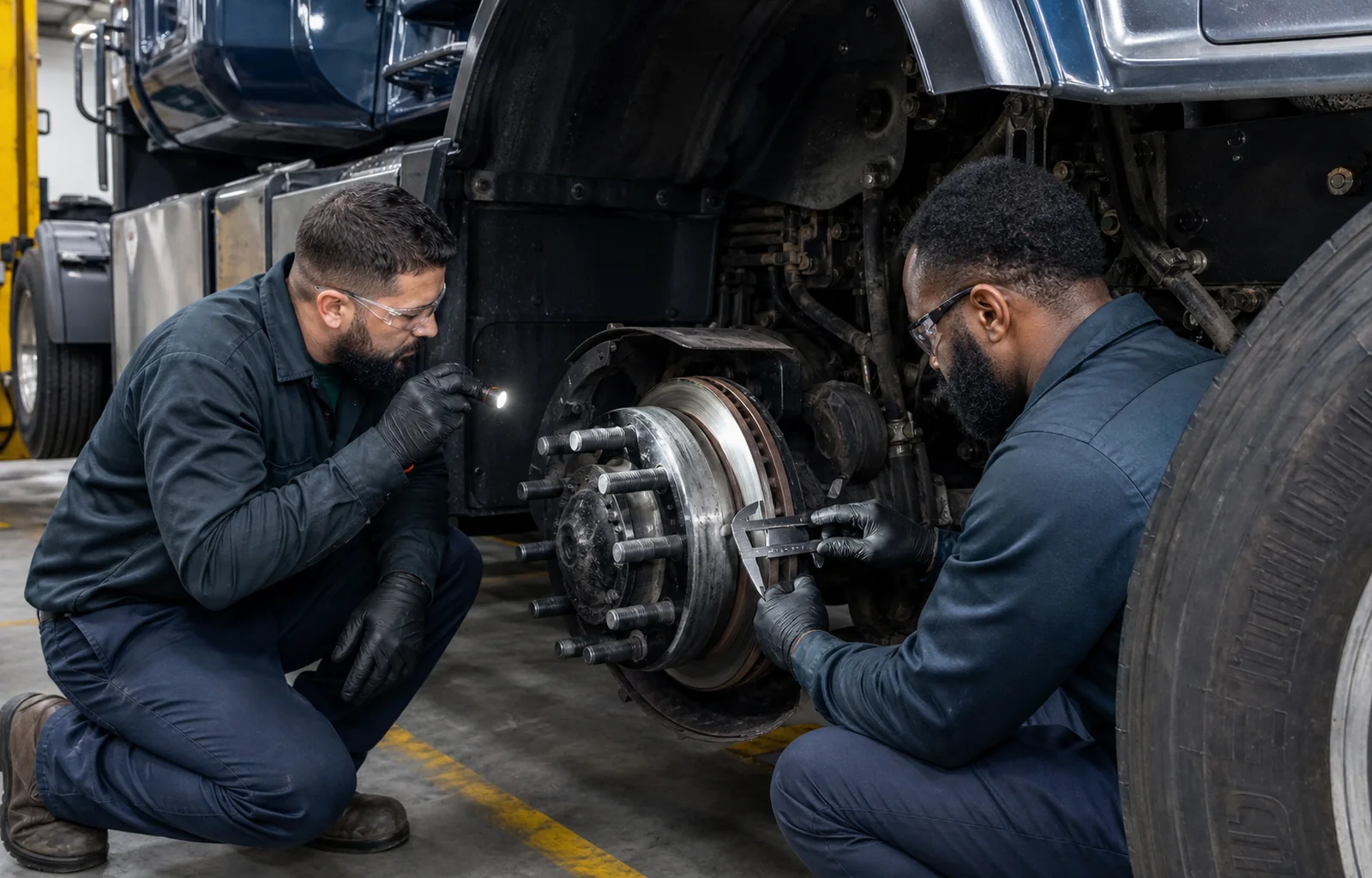
The Commercial Vehicle Safety Alliance has scheduled Brake Safety Week for August 23 through 29, with a special focus on brake drums and rotors. Inspectors will still conduct full commercial motor vehicle inspections and place vehicles out of service when qualifying brake violations are found.
The event should not be treated as a one-week test. Brake condition is a year-round operating responsibility, and the best preparation is the same maintenance process a carrier should already be using.
Drums and rotors deserve direct attention because damage, wear, or contamination can reduce braking performance and point to other problems in the system. Technicians need adequate access, lighting, tools, and repair authority to evaluate what they see instead of relying on a quick glance through the wheel.
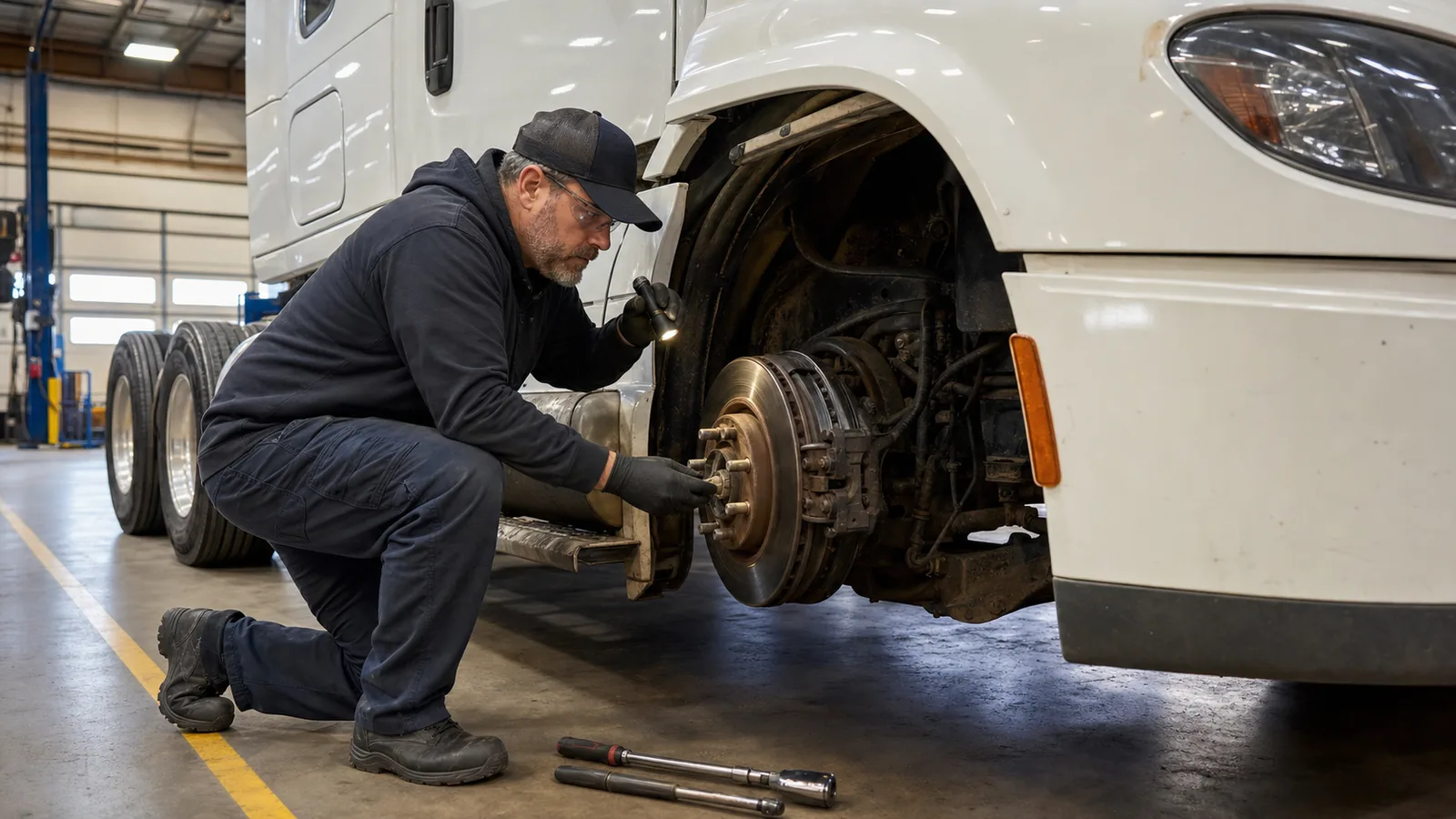
Begin with the preventive-maintenance schedule and recent driver reports. Look for recurring adjustment concerns, air leaks, uneven wear, heat signs, damaged components, and vehicles that return with similar defects. A repeated issue may indicate a repair-process or component problem rather than an isolated finding.
Driver inspections also matter. Training should show what can be observed safely, which warning signs require immediate contact, and how to describe the problem clearly. A vague note that the brakes feel different may be the start of an important maintenance conversation.
When a defect is repaired, close the loop. Record what was found, the correction, the parts or measurements involved, and who confirmed the vehicle was ready to return to service. That record helps the next technician and gives the carrier a better view of patterns across the fleet.

A focused pre-event review can be useful, but it should not create a temporary inspection line that disappears afterward. Use the week to test whether normal processes are catching defects early and whether drivers, maintenance, and operations are communicating quickly enough.
If the review finds a gap, protect the repair decision from schedule pressure. The safest and most professional answer is to keep the vehicle out of service until the brake system is ready.
The public inspection event will end. The standard for a road-ready brake system does not.