
A single train-horn blast does not clear the crossing
FRA is allowing a one-blast pattern in one narrow situation beginning September 30. Truck drivers still must obey the crossing, make required stops or checks, and enter only with room to clear.
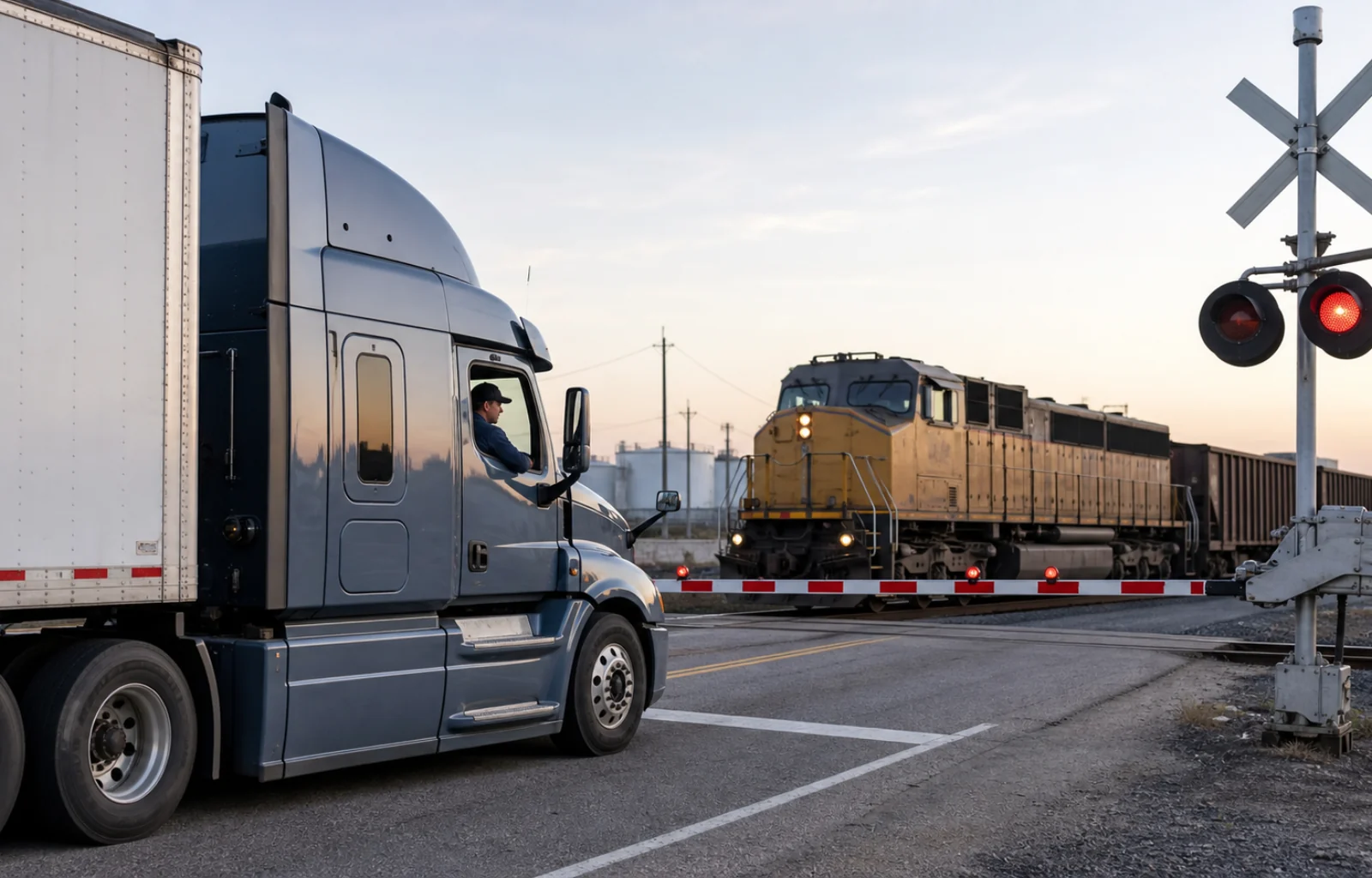
A familiar train-horn pattern will gain a narrow exception on September 30. The Federal Railroad Administration's final rule lets a locomotive engineer use one single horn blast when a train, locomotive consist, or individual locomotive has been stopped close to a public highway-rail grade crossing and then enters that nearby crossing. The change does not make one blast a clearance signal for a truck driver, pedestrian, or other road user.
The exception is bounded by what the engineer can see and judge. The crossing must be unobstructed, and the engineer must determine either that its flashing-light gates are fully lowered or that no conflicting motorist or pedestrian traffic is approaching. Outside the stopped-nearby situation, the rule does not replace the standard two-long, one-short, one-long pattern. It gives the engineer discretion over the warning pattern in a specific movement; it does not give highway traffic discretion to ignore lights, gates, signs, a train, or an unsafe approach.
Commercial-vehicle duties remain in their own rulebook. Under 49 CFR 392.10, drivers of specified passenger and hazardous-materials vehicles generally must stop between 15 and 50 feet from the nearest rail before looking and listening for an approaching train, subject to the section's listed exceptions. Section 392.11 generally requires other commercial drivers to slow and ascertain that the tracks are clear, again subject to its exceptions. Section 392.12 adds a separate rule for commercial vehicles: do not enter unless there is enough space to drive completely through without stopping.

That separation is the useful training point. Editorial inference: a carrier should teach the horn as one warning input, not as a code that grants permission to cross. A driver may hear the familiar sequence, a shorter warning, or a single blast from equipment that had been stopped nearby. The response still comes from the actual crossing: approach under control, follow active warnings and lawful stop requirements, look and listen, confirm the route across is clear, and leave enough room for the entire combination and any overhanging cargo beyond the farthest rail.
Industry sponsor Connect the records, conversations, and follow-up that keep a carrier moving.
See how it works ↗
Connect the records, conversations, and follow-up that keep a carrier moving.
See how it works ↗
A short yard or classroom drill can test the distinction without putting a vehicle on tracks. Editorial inference: show a gated crossing with a train already moving, a passive crossing with no active warning, and a queue that leaves no room on the far side. Ask the driver to identify the governing signal, required stop or slowdown, escape space, and reason not to enter. Then add the new one-blast scenario. The correct answer should not depend on naming the horn pattern; it should depend on controlling the truck and clearing the full crossing safely.
Emergency information belongs in the same briefing. FRA tells motorists never to stop on tracks and to use the blue-and-white Emergency Notification System sign when an emergency occurs at a grade crossing, giving the railroad the crossing identification number and the problem. The immediate priority is people, not equipment or freight: get clear of the tracks, contact the railroad through the posted number, and call emergency services as needed. A changed horn pattern is a narrow railroad operating rule. The durable truck-side control is still to treat every track as active and never commit a combination that cannot clear it.