
A refilled shop bottle needs a label decision
The workplace-label exception follows one worker, one shift and continued control. A shared spray bottle calls for a different plan before it reaches the next technician.
 Connect the records, conversations, and follow-up that keep a carrier moving.
See how it works ↗
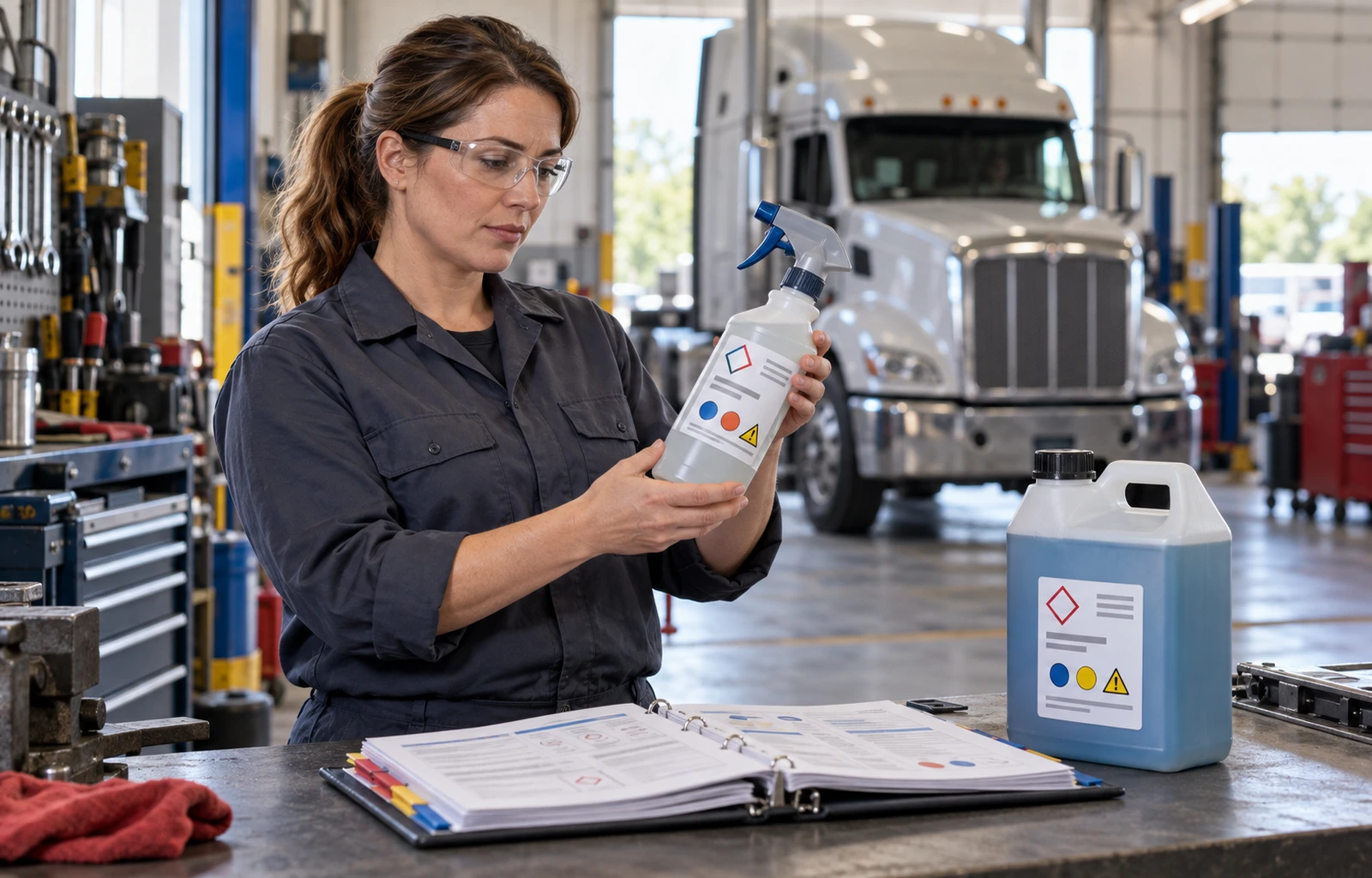
A refillable spray bottle can make a fleet shop task easier while separating a chemical from the information that arrived with it. The practical question is whether that bottle will stay with the employee who filled it or become shared equipment. This resource examines existing OSHA hazard-communication requirements for covered workplace hazardous chemicals, with a focus on shop use. It announces no new rule. The examples and suggested review routine are editorial analysis; product-specific handling and protection decisions belong with the employer’s hazard-communication program and current supplier information.
OSHA’s immediate-use exception is narrow: the chemical must remain under the control of the person who transferred it from a labeled container, be used only by that person, and be used within that work shift. A bottle’s small size or brief intended task does not answer those questions. Consider a technician filling a portable container for personal use during the shift. Now change the plan: a second technician will use it, or it will remain for tomorrow’s crew. Those changes defeat the basis for relying on immediate use. Decide the intended use before the transfer, rather than discovering an unidentified bottle at the next handoff.
For workplace containers outside the exception, section 1910.1200(f)(6) allows either the specified shipped-label information or a product identifier with general hazard information that works with immediately available program information to communicate specific physical and health hazards. Workplace warnings must be legible and in English; additional languages may accompany them. Our suggested shop review asks a technician to identify the product and explain where its hazard information can be found. A familiar nickname such as “cleaner” should trigger a check that the actual identifier and warning system work together. Familiarity with a bottle’s color is a poor substitute for a usable identification system.
The original supplier label is a useful starting point for that review. OSHA’s label quick card illustrates the relationship among the product identifier, signal word, hazard statements, pictograms, precautions and supplier identification on shipped containers. A supervisor can compare that information with the proposed shop-container treatment and the written program. Our recommendation is to approve a consistent labeling method for each product before bottles circulate between bays. Keep the review focused on the actual product and container; an illustrative safety graphic or an unrelated label template cannot determine what belongs on a particular bottle.
The safety data sheet supplies the detail needed after identification. OSHA’s SDS brief explains that Section 1 identifies the product, Section 2 describes hazards, Section 7 covers handling and storage, and Section 8 covers exposure controls and personal protection. Our suggested exercise is to start with a closed shop bottle and retrieve the matching sheet using the same access method the next shift would use. Then locate those sections together. This can expose a mismatch between a shop nickname and the supplier’s product name before anyone needs urgent information. The exercise should lead to the product’s instructions, rather than a generic assumption that one glove or ventilation arrangement fits every cleaner.
Finish the review at the point where the bottle will actually be used. OSHA permits electronic SDS access when it creates no barrier to immediate employee access; the information must be accessible in the work area during each shift. Our recommended handoff therefore tests access with the receiving employee’s permissions and equipment, including the evening crew. If the bottle’s identity cannot be established, refer it to the responsible supervisor through the shop’s procedure instead of guessing at a replacement label. A useful closeout records which product was verified, which labeling method applies and how the next worker reaches its safety information.