
A sealed trailer still needs loading assurance
A seal can limit a driver’s cargo examination without settling the carrier’s loading responsibility. Resolve access, evidence and authority before release.
 Keep drivers, dispatch, safety, and maintenance working from one operating view.
Explore Pro FleetSync ↗
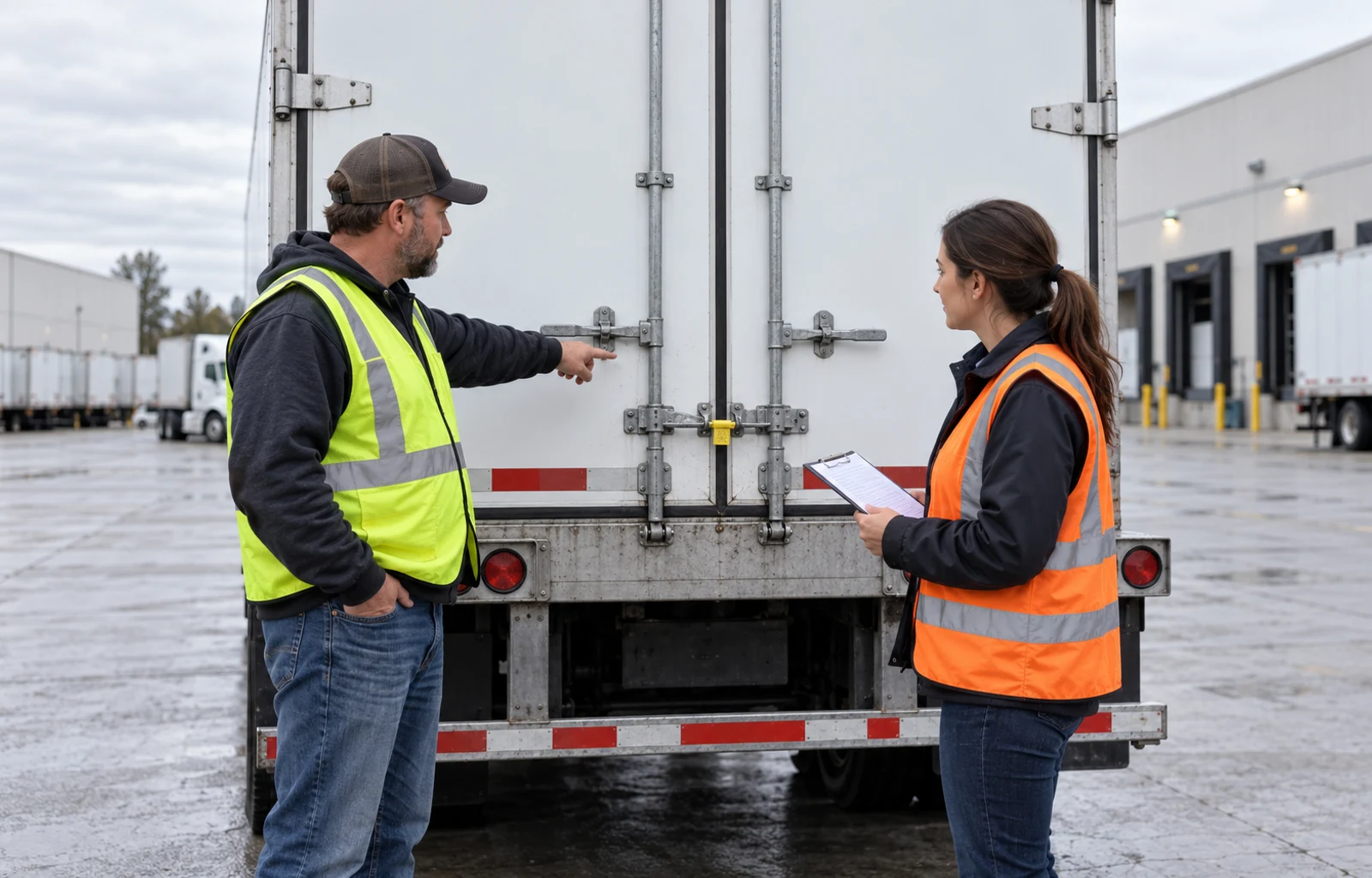
A driver reaches a distribution yard, receives paperwork and finds the assigned trailer already closed and sealed. Who has established that the freight inside was loaded safely? The seal alone cannot answer that question. This practical resource examines the existing federal cargo-inspection exception and the carrier’s separate loading responsibility. It addresses ordinary freight operations covered by these rules, rather than specialized hazardous-material or customs procedures, and reports no new regulation. Its suggested handoff steps are editorial recommendations for resolving an information gap before a load moves.
Section 392.9(a) prohibits a driver from operating, and a carrier from requiring or permitting operation, unless cargo is properly distributed and adequately secured. It also addresses secured doors and other equipment and unobstructed driver access, movement and visibility. Paragraph (b)(4) excepts specified drivers from paragraph (b): those driving a sealed vehicle who have been ordered not to open it for cargo inspection, or a vehicle loaded so that inspecting the cargo is impracticable. The exception is tied to those conditions; it does not remove paragraph (a). Editorial implication: a shipment’s access restriction and its safe-loading assurance belong in separate review questions.
FMCSA directly addresses a shipper-loaded, sealed trailer in its published regulatory guidance. The agency gives several examples of how a carrier may meet its proper-loading responsibility: arranging supervision of loading, obtaining a connecting-line freight-bill notation that the lading was properly loaded, or obtaining approval to break the seal for inspection. These are agency examples, not a requirement to perform all three or a claim that any generic document proves compliance. For a carrier choosing a method, the practical question is which evidence applies to this trailer and this movement. A seal number identifies a closure; by itself it does not describe distribution or restraint inside.
Build that distinction into the pickup conversation. As an editorial workflow, identify the trailer, load reference and seal, establish who imposed the no-opening instruction, and route the loading evidence to the carrier’s designated reviewer. If the carrier arranged supervision, locate the responsible person’s record. If it relies on the freight-bill method described by FMCSA, check that the notation actually concerns proper loading. If inspection is needed, obtain approval through the appropriate shipper and carrier contacts and resolve any additional security or customs restrictions before opening. None of these suggested record fields is a newly prescribed federal form. Their purpose is to keep a restriction from becoming an unanswered loading question.
A lock requires a different conversation. In another current guidance answer, FMCSA says a cargo compartment padlocked with a key held by the driver is not sealed for this exception. The driver has access and must perform the cargo and securement examinations described in paragraph (b). Outside the exception, that paragraph calls for a check before driving, inspection within the first 50 miles, and subsequent reexamination at a duty-status change, three driving hours or 150 driving miles, whichever occurs first. Editorial recommendation: describe the actual access arrangement in dispatch instructions rather than using “locked” and “sealed” interchangeably. Assign an achievable inspection plan instead of assuming every closed van qualifies for an exception.
Consider a hypothetical pickup packet containing only a trailer number, seal number and delivery appointment. The driver has been told not to open the trailer, but dispatch cannot identify how loading was assured. Our editorial recommendation is to pause release and ask the designated carrier reviewer to resolve that missing evidence with the shipping contact. Do not invent a loading certification, instruct a driver to cut a seal without approval, or treat delivery pressure as an answer. Conversely, when an authorized inspection occurs, record the resulting action and updated seal information for the next handoff. A clear release decision tells the driver both why access is restricted and how the carrier addressed the cargo behind the doors.